
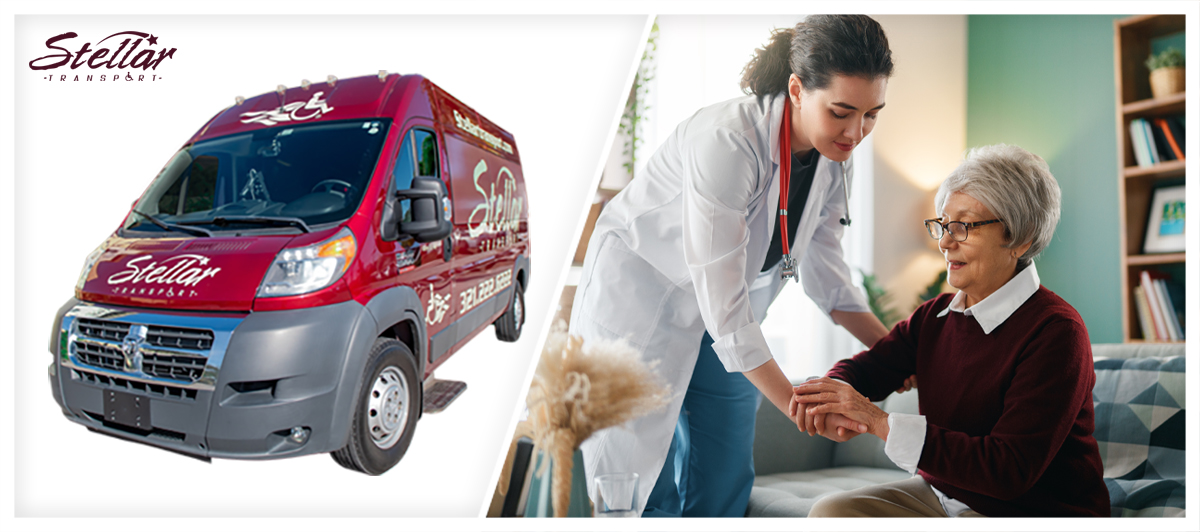
Getting to a medical appointment can be challenging for patients who have limited mobility, use a wheelchair or walker, are recovering from a procedure, or simply need extra support when traveling. In these situations, transportation involves much more than the time spent inside a vehicle. The journey between the patient’s home, the vehicle, and the medical facility can sometimes be the most difficult part of the trip.
Door-to-door assistance is an important part of non-emergency medical transportation (NEMT) because it provides patients with additional support throughout their journey. By helping make transitions safer and less stressful, this level of service can improve access to healthcare while giving patients and their families greater confidence in the transportation experience.
The Journey Begins Before the Patient Enters the Vehicle
Traditional transportation typically begins and ends at the curb. For many NEMT passengers, however, simply reaching the vehicle can present challenges.
A patient may have difficulty walking from their front door to the driveway, navigating steps, maintaining balance, or maneuvering a mobility device. Someone recovering from surgery may be temporarily weaker or less steady than usual. Older adults may also need additional time and assistance when entering or exiting a vehicle.
Door-to-door assistance recognizes that these transitions are part of the transportation experience. Instead of expecting patients to manage them entirely on their own, appropriate assistance can help make the overall trip more manageable.
Helping Reduce the Risk of Falls and Injuries
Falls are an important concern for people with mobility limitations. Changes in elevation, unfamiliar surroundings, uneven surfaces, and getting into or out of a vehicle can all present difficulties for someone who is unsteady on their feet.
Rushing can make these situations even more challenging. Medical transportation allows the trip to be approached with the patient’s mobility needs in mind, including providing appropriate time for boarding and exiting.
For passengers using wheelchairs, walkers, canes, or other mobility aids, having transportation designed around accessibility can also reduce unnecessary physical strain. The goal is to help patients travel as safely and comfortably as possible without creating additional challenges on the way to their care.
Making Medical Appointments Less Stressful
For some patients, the transportation process itself can create anxiety. They may worry about whether a vehicle can accommodate their mobility needs, how they will get from their home to the vehicle, or whether they will be able to reach the medical office safely once they arrive.
Door-to-door assistance can provide reassurance by making transportation more predictable. Patients know they have transportation arranged with their individual needs in mind rather than having to solve each part of the trip on their own.
Reducing these concerns allows patients to focus more of their attention on the reason for the trip, whether that is a routine appointment, diagnostic test, therapy session, specialist visit, or ongoing treatment.
Supporting Greater Independence
Needing help with transportation does not mean a patient wants to give up their independence. In fact, dependable NEMT can help individuals remain more involved in managing their own healthcare.
Without appropriate transportation, patients may have to depend on relatives or friends every time they need to see a healthcare provider. This can make scheduling difficult, especially for individuals who attend frequent appointments.
Door-to-door transportation provides another option. Patients can continue attending necessary appointments while receiving additional assistance with the portions of the journey that may be difficult for them to manage independently.
Providing Reassurance for Families and Caregivers
Transportation challenges often affect caregivers as much as patients. Family members may worry about whether a loved one can safely get into a vehicle, navigate a medical facility, or manage a trip when they cannot accompany them.
Reliable NEMT can help reduce some of that concern. Knowing that transportation is designed to accommodate passengers who may need additional assistance can provide valuable peace of mind.
It can also reduce the pressure on caregivers to personally handle every medical trip. This can be particularly important when appointments are frequent or conflict with work, childcare, or other responsibilities.
Helping Patients Stay Consistent With Their Care
Transportation barriers can eventually become healthcare barriers. If getting to an appointment feels physically difficult or unsafe, a patient may be more likely to postpone care.
Door-to-door assistance helps address the entire transportation process rather than focusing only on the drive. By making it easier for patients to leave home, enter the vehicle, reach the medical facility, and return home afterward, NEMT can help patients maintain more consistent access to their healthcare providers.
That consistency can be especially valuable for patients attending recurring treatments, rehabilitation, follow-up visits, or appointments related to chronic conditions.
More Than Transportation From One Address to Another
Non-emergency medical transportation serves patients whose needs may go beyond a conventional ride. For individuals with mobility challenges, the quality of the journey can depend on the assistance they receive before and after they are seated in the vehicle.
Door-to-door assistance helps create a safer, more comfortable, and more supportive transportation experience. It can reduce stress, support independence, provide reassurance to families, and help patients remain connected to the healthcare services they need.
For more information about dependable transportation and assistance for medical appointments, contact Stellar Transport.