
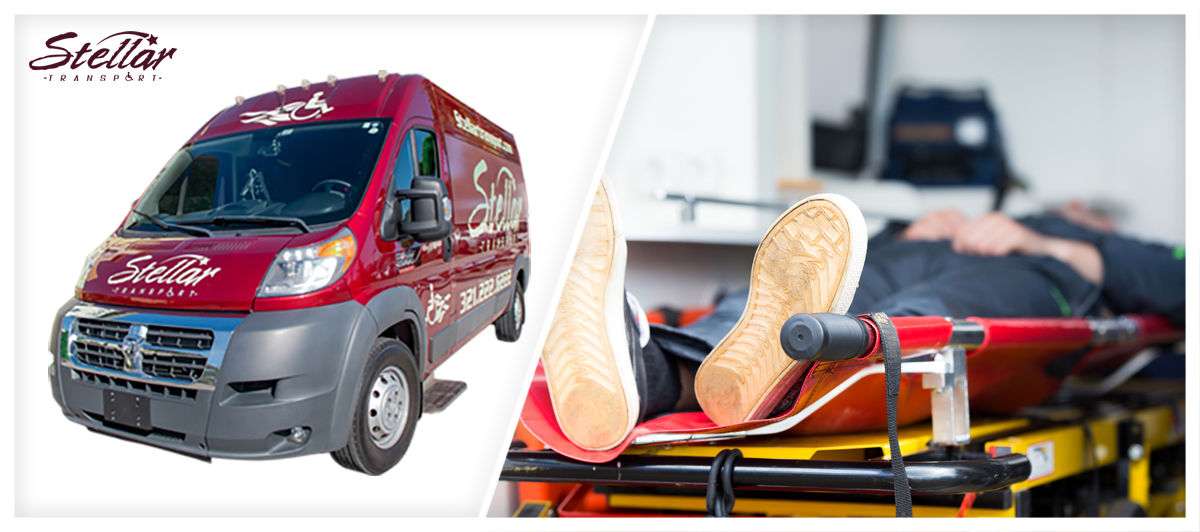
Not every person who needs medical transportation can comfortably or safely travel while sitting in a standard passenger seat or wheelchair. Some individuals have significant mobility limitations, are recovering from a procedure or injury, or have difficulty remaining upright for the duration of a trip. When the situation is not an emergency but traveling in a seated position is not practical, non-emergency stretcher transportation may be an appropriate option.
Stretcher transportation provides a way for qualifying passengers to travel while lying down without using an emergency ambulance for a planned, non-emergency trip. It can be used for transportation between healthcare facilities, returning home after a hospital or rehabilitation stay, attending certain medical appointments, and other situations in which a passenger’s mobility needs require additional accommodation.
Understanding Non-Emergency Stretcher Transportation
Non-emergency stretcher transportation is designed for passengers who need to remain in a lying or reclined position during transportation but do not require the emergency medical care provided by an ambulance.
The distinction between non-emergency transportation and emergency medical services is important. NEMT is intended for scheduled transportation when the passenger is medically stable and does not need emergency treatment during the trip. If someone is experiencing a medical emergency, 911 or the appropriate emergency medical service should be contacted instead.
For planned trips, however, stretcher transportation can fill an important gap between conventional passenger transportation and emergency ambulance services.
When Sitting Upright Is Difficult
One of the most common reasons to consider stretcher transportation is that the passenger cannot comfortably remain seated for the trip. This may occur because of an injury, surgery, mobility limitation, weakness, or another circumstance that makes maintaining a seated position difficult.
Even relatively short trips can become challenging when a person cannot comfortably use a standard vehicle seat. Longer trips may make those difficulties even more significant.
When appropriate for the passenger’s condition, traveling by stretcher allows the individual to remain lying down throughout transportation rather than attempting a difficult transfer into a conventional vehicle.
Returning Home From a Hospital or Rehabilitation Facility
Discharge from a hospital, skilled nursing facility, or rehabilitation center does not necessarily mean a patient has regained full mobility. Some people are medically stable enough to continue recovering at home but still cannot easily use conventional transportation.
A family member may have a vehicle available but no practical way to transfer the patient into it. Even wheelchair transportation may not be appropriate if the passenger cannot tolerate remaining seated throughout the journey.
In these situations, scheduled stretcher transportation may provide a practical way to complete the transition home. Transportation should be coordinated with the discharging facility so that the appropriate level of service is arranged for the patient’s needs.
Traveling Between Healthcare Facilities
Patients sometimes need transportation from one healthcare facility to another without experiencing an emergency. A person might be moving from a hospital to a rehabilitation facility, transitioning to a skilled nursing facility, or traveling between other care settings.
These trips can present additional challenges because the passenger may have substantial mobility limitations even though emergency medical intervention is not necessary.
Non-emergency stretcher transportation can help accommodate passengers who need to remain lying down during these planned transfers. Facility staff, caregivers, and family members can coordinate transportation based on the passenger’s mobility requirements and destination.
Transportation to Scheduled Medical Appointments
Stretcher transportation can also be useful for certain scheduled healthcare appointments. A passenger who cannot use a wheelchair or standard vehicle may still need to attend follow-up visits, diagnostic appointments, treatments, or other healthcare services.
Without appropriate transportation, getting to these appointments can become difficult for both the patient and caregivers. Attempting to use a family vehicle when the passenger cannot comfortably sit or transfer can create unnecessary challenges.
Scheduling the appropriate transportation in advance gives families and caregivers an opportunity to plan the trip around the passenger’s mobility needs.
Stretcher Transportation Is Not the Same as an Ambulance
Because both services may transport someone while lying down, stretcher transportation and ambulance transportation can sometimes be confused. Their purposes, however, are different.
An ambulance is equipped and staffed to respond to medical emergencies and provide medical care during transportation. Non-emergency stretcher transportation is intended for medically stable passengers who need a particular method of transportation because of mobility or positioning needs.
NEMT should never be used as a substitute for emergency medical services. Chest pain, severe breathing difficulties, loss of consciousness, signs of a stroke, serious injuries, or other potentially life-threatening situations require emergency assistance rather than scheduled transportation.
Planning Ahead for a Stretcher Trip
Stretcher transportation generally requires more planning than arranging a conventional ride. When scheduling transportation, it is important to provide accurate information about the passenger’s condition, mobility limitations, pickup location, destination, and any circumstances that could affect access.
The physical layout of the pickup and destination locations may also be important. Stairs, narrow entrances, elevators, and other accessibility considerations can affect transportation arrangements.
Hospitals, rehabilitation centers, nursing facilities, patients, and caregivers can help make the process smoother by discussing these details before the scheduled trip. Planning ahead also gives the transportation provider an opportunity to determine whether the requested service is appropriate for the passenger’s needs.
Choosing the Right Transportation with Stellar Transport
The appropriate transportation option depends on each passenger’s mobility and circumstances. While wheelchair-accessible transportation works well for many individuals, some passengers need to remain lying down during a planned trip. In those situations, non-emergency stretcher transportation can provide an alternative when emergency ambulance care is not required.
Stellar Transport provides non-emergency medical transportation for passengers with a variety of mobility needs, including stretcher and wheelchair transportation. Whether someone needs to return home after a healthcare stay, travel between facilities, or attend a scheduled medical appointment, Stellar Transport can help families and caregivers determine an appropriate transportation option.
For more information about non-emergency stretcher transportation or to discuss an upcoming trip, contact Stellar Transport.