
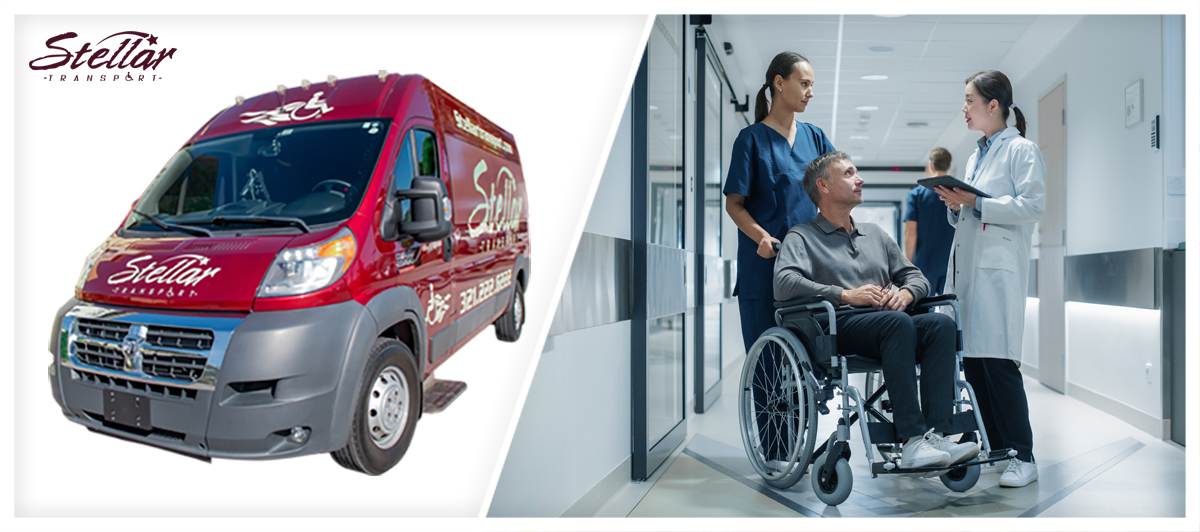
Outpatient surgery allows many patients to undergo a procedure and return home the same day rather than spending the night in a hospital. While this can make recovery more convenient, it also creates an important question that should be addressed before the procedure: how will the patient get home? After surgery, a person may be tired, uncomfortable, temporarily less mobile, or unable to drive because of anesthesia or medications. Even getting into and out of a standard passenger vehicle may be difficult.
Non-emergency medical transportation (NEMT) can provide an appropriate transportation option for certain patients following outpatient procedures. Wheelchair-accessible and other specialized transportation services can accommodate passengers whose mobility needs make an ordinary ride home difficult. Planning transportation ahead of time can help patients and their families make the transition from the surgical facility to home more manageable.
Why Transportation Should Be Planned Before Surgery
Transportation home should be considered well before the day of an outpatient procedure. Depending on the surgery and medications involved, patients may be instructed that they cannot drive themselves home. Healthcare facilities may also have specific discharge requirements regarding who can transport or accompany a patient, so those requirements should always be confirmed directly with the facility.
Even when a family member or friend is available to drive, a personal vehicle may not be suitable for the patient’s needs after surgery. A person who normally has little difficulty entering a car may find the process much harder immediately following a procedure.
Planning ahead gives patients an opportunity to determine what level of transportation they may need and avoid trying to make arrangements while preparing to leave the facility.
Mobility Can Be Different Immediately After a Procedure
A patient’s transportation needs after surgery may be very different from their needs before the procedure. Temporary weakness, discomfort, restricted movement, or instructions to limit weight-bearing can make getting around more challenging.
Procedures involving the knees, hips, feet, back, or other areas affecting mobility can be particularly difficult when it comes to entering and exiting a traditional vehicle. Patients may also leave a facility using a wheelchair even if they do not normally rely on one.
In these circumstances, wheelchair-accessible NEMT can offer a more practical alternative. Vehicles designed to accommodate wheelchairs can reduce the need to navigate the limited space and difficult transfers associated with many standard passenger vehicles.
Reducing Difficult Vehicle Transfers
Getting into a car often requires more movement than people realize. A passenger may need to lower themselves onto the seat, turn their body, lift their legs into the vehicle, and repeat the process in reverse upon arrival.
Those movements can be challenging for someone recovering from surgery. Depending on the individual’s mobility and the transportation service being used, wheelchair-accessible transportation may allow the passenger to travel without transferring into a conventional vehicle seat.
This can be particularly helpful for patients who already use a wheelchair or who have significant temporary mobility restrictions following their procedure.
When Stretcher Transportation May Be Needed
Some passengers may have mobility limitations that make remaining seated for the trip difficult or impractical. When the trip is non-emergency and appropriate for this type of service, stretcher transportation may provide another option.
Stretcher transportation is different from emergency ambulance service. It is intended for planned transportation when a passenger needs to travel in a lying-down position but does not require emergency medical intervention during the trip.
The appropriate transportation method depends on the individual’s condition and discharge instructions. Patients and caregivers should discuss transportation needs with the healthcare facility when determining which option is appropriate.
NEMT Can Help With Follow-Up Appointments, Too
Getting home after outpatient surgery is often only the beginning of the recovery process. Follow-up appointments may be necessary to evaluate healing, remove stitches or dressings, perform imaging, adjust treatment plans, or begin rehabilitation.
Physical therapy and other rehabilitation appointments can also become part of the patient’s schedule. If mobility restrictions continue for several weeks, transportation may remain difficult even after the initial recovery period.
NEMT can provide a consistent transportation option for these appointments. Instead of arranging a different ride each time, patients and caregivers can plan transportation based on the patient’s ongoing mobility needs.
Helping Family Members and Caregivers
Family members frequently take responsibility for helping loved ones after surgery, but transportation can be difficult even when someone is available to assist. The caregiver may have a small vehicle, be unable to lift mobility equipment, or have difficulty helping the patient transfer safely.
Using professional non-emergency medical transportation can give families another resource. A family member can still be involved in the patient’s recovery without necessarily having to solve every transportation challenge personally.
This can be especially valuable when a patient’s recovery requires multiple appointments or when family members have work and other responsibilities that make providing every ride difficult.
Know the Facility’s Discharge Requirements
Arranging NEMT does not automatically satisfy every outpatient facility’s discharge policy. Some procedures involving anesthesia or sedation may require a responsible adult to accompany the patient, remain with the patient after discharge, or meet other specific requirements.
Patients should confirm these rules with their surgeon or facility before scheduling transportation. Doing so helps ensure that both the transportation arrangements and any required caregiver arrangements are in place before the procedure.
Plan Your Post-Surgery Transportation with Stellar Transport
Returning home comfortably is an important first step in recovering from an outpatient procedure. When limited mobility, wheelchair use, or other transportation challenges make a traditional vehicle difficult to use, non-emergency medical transportation can provide another way to make the trip.
Stellar Transport provides NEMT services for passengers with a variety of mobility needs, including wheelchair and stretcher transportation. Whether transportation is needed after an outpatient procedure or for follow-up appointments during recovery, planning ahead with Stellar Transport can make getting to and from healthcare facilities easier for patients and their families.
If you or a loved one has an upcoming outpatient procedure and needs transportation, contact Stellar Transport to discuss the available transportation options.